
Sobrespu
Beyond buildings: Assessing the carbon footprint of outdoor spaces in construction projects
To fight climate change, countries set carbon budgets to keep emissions within safe limits. In Switzerland, SIA 390/1 defines how much CO₂ the building sector can emit during construction and use.
But outdoor spaces are often left out. These areas are still part of the project and can have a real carbon footprint. Ignoring them means underestimating emissions from built environment management.
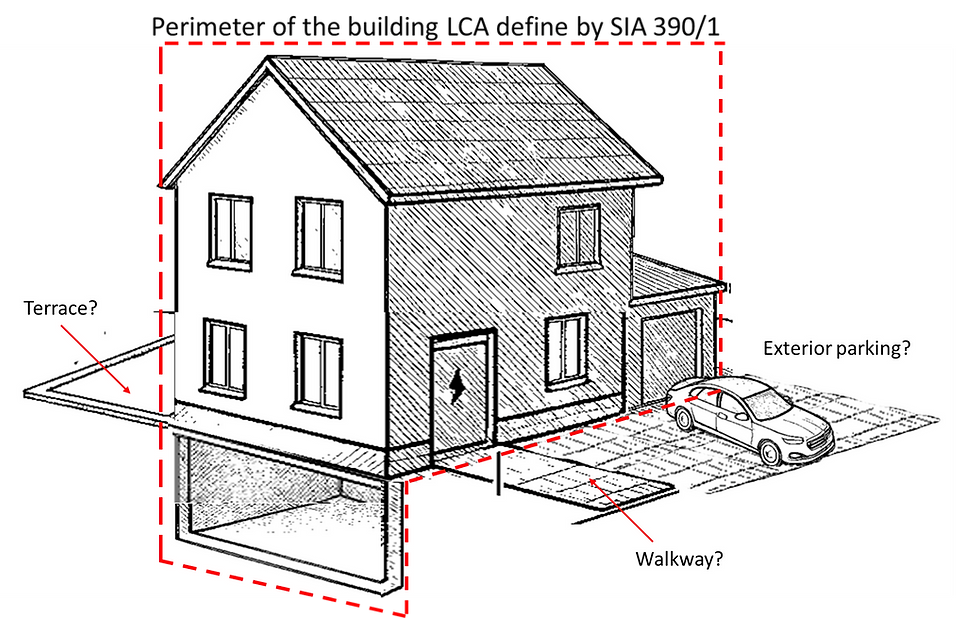
How significant are outdoor surfaces in a building’s overall impact?
The study focuses on surfaces used by pedestrians and light motorised vehicles, with a functional unit of one square meter of low-traffic outdoor surface over a 60-year lifespan.
The approach involves:
Identifying the most commonly used pavement materials
Performing a Life Cycle Assessment (LCA) to determine the carbon emissions associated with each material
Calculating the carbon footprint of the different pavement types

Outdoor surface materials show a wide range of carbon impacts depending on thickness and type. Gravel has the lowest footprint (0.17 kg CO₂/m²·year). Imported stone increases emissions by about 25% compared to local sourcing. Perforated concrete has 1.8 times less impact than conventional concrete paving for the same thickness. Polished stone triples the impact compared to grounded stone. Cement-bound solutions add an extra 0.25–0.3 kg CO₂/m²·year.


Since outdoor surfaces can represent up to 20% of a building’s future carbon budget, reduction strategies are key:
Use low-carbon, locally sourced materials
Minimize thickness and overall material use
Favor perforated concrete over full concrete paving
Limit paved areas
Avoid cement-bound and non-reversible solutions
Restrict polishing and unnecessary finishes
Further details can be found in the publication, and a dedicated tool has been developed and made available.
https://www.buildinglowcarbon.com/our-tools/sol-impact
Key information
Funding
-
Partners
1
30/10/2024-31/03/2025
Duration
Project Gallery


Publications or
Supplementary material
Write a title here. Click to edit and add your own.
This is a paragraph area where you can add your own text. Just click “Edit Text” or double click here to add your own content and make changes to the font. It's a great place to tell a story about your business and let users know more about you.

